
What does FF&E stand for?
FF&E stands for furniture, fixtures and equipment. It is the movable, non-structural content of a building: everything a client buys to furnish and run a space once the walls, floors and built-in services are finished. In interior design, hospitality and commercial fit-outs, FF&E usually has its own budget, its own schedule and its own purchasing process, separate from the construction contract.
Some teams write it FFE or FF+E; the meaning is the same. The three letters split the scope like this:
- Furniture: sofas, chairs, beds, tables, desks, casegoods such as dressers and nightstands, and loose storage.
- Fixtures: decorative items attached to the building but removable, such as pendant lights, wall sconces, mirrors, artwork, window treatments and rugs.
- Equipment: freestanding items that do a job, such as TVs, minibar fridges, coffee machines, safes and office electronics.
Note that "fixtures" in FF&E does not mean plumbing fixtures. Toilets, sinks and faucets are part of the construction scope, not the FF&E package.

What is not FF&E?
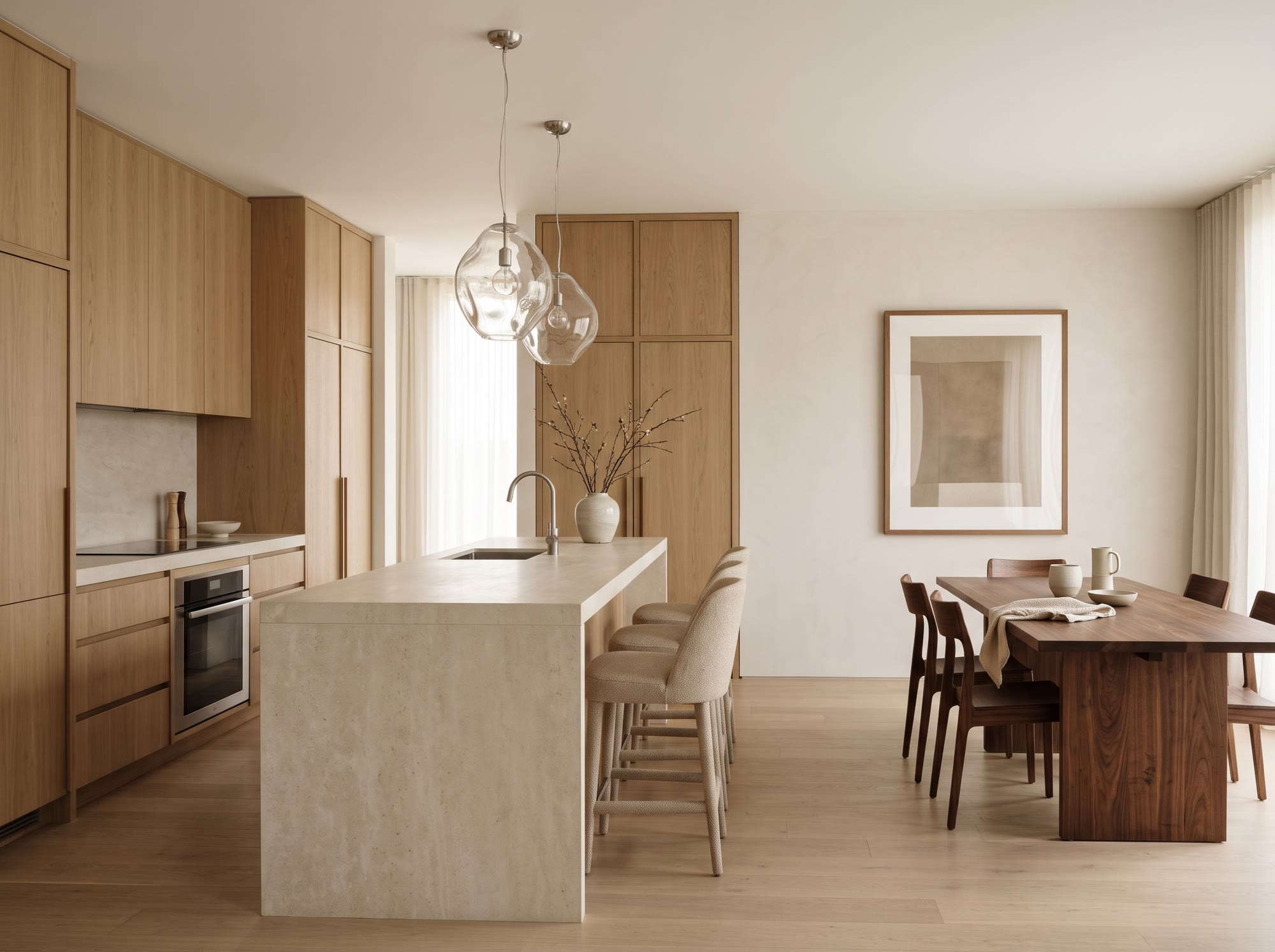
A common rule of thumb: if you could lift the building and turn it upside down, FF&E is what would fall out. What stays attached is construction: walls, flooring, built-in cabinetry and joinery, stone countertops, plumbing, HVAC and recessed architectural lighting.
Some items sit on the line, and each project should decide them in writing before pricing starts:
- Cabinetry: freestanding units are FF&E; built-in millwork usually belongs to the contractor.
- Lighting: decorative pendants and lamps are FF&E; downlights and track lighting are electrical scope.
- Appliances: freestanding appliances are often FF&E; integrated kitchen appliances usually go with the kitchen package.
- Window treatments and wallcovering: curtains and blinds are usually FF&E; wallpaper is usually finishes.
FF&E vs OS&E
Hotels and restaurants split their opening budget in two. FF&E covers the long-life items above. OS&E, operating supplies and equipment, covers the smaller items a property uses up or replaces often: linens, towels and robes, tableware and glassware, cutlery, toiletries, hangers and housekeeping supplies.
The split matters because the two are bought, budgeted and accounted for differently. FF&E is specified by the designer and treated as a long-term asset; OS&E is usually bought by the operator from supply catalogs and replenished as stock.

How FF&E is treated in accounting
Because FF&E lasts several years, businesses usually record it as a fixed asset and depreciate it rather than expensing it at once. In the United States, IRS Publication 946 lists office furniture and fixtures as 7-year property under MACRS, while computers are 5-year property.
Rules differ by country and by asset, so treat this as a starting point and confirm the classification with your accountant.
What goes on an FF&E schedule
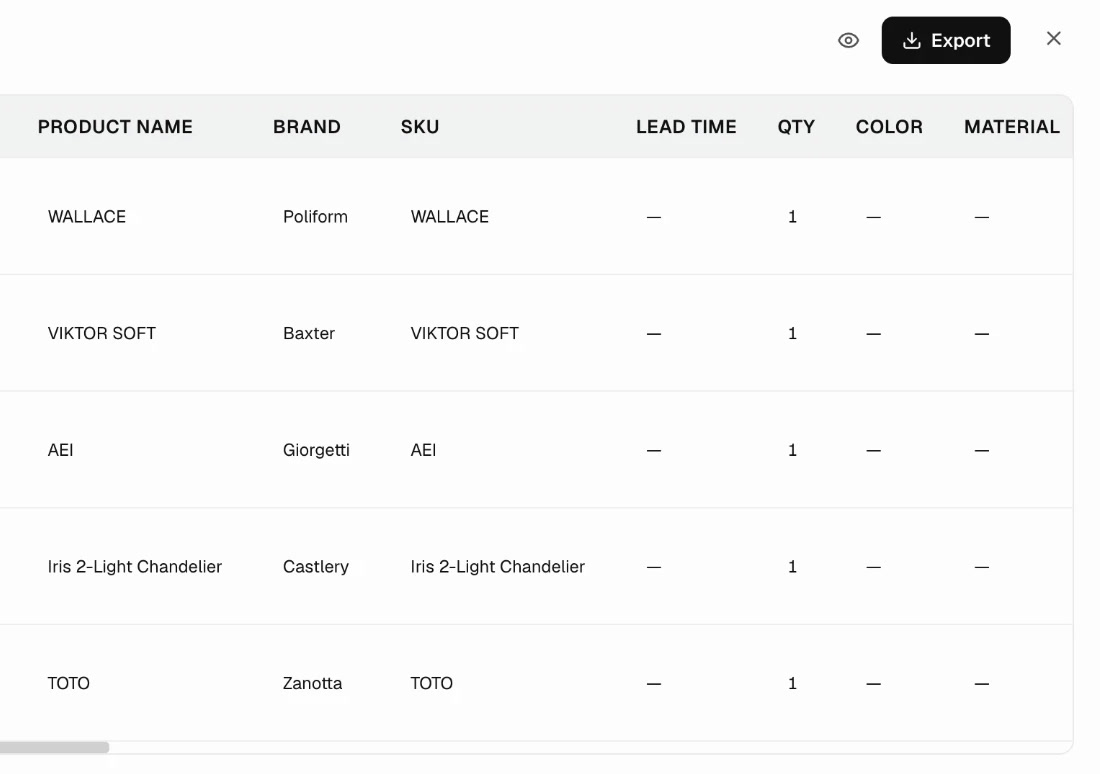
An FF&E schedule is the working list of every item to be bought for the project, one row per item per room. It is the document the client approves, the purchaser orders from and the installer checks against. A useful schedule has these columns:
- Item code and room: a short code such as S01 for the first sofa or L04 for the fourth light, plus the room or area.
- Product: category, product name, brand, model or SKU, and a link or spec sheet.
- Specification: dimensions, finish, color, material and fabric.
- Quantity and cost: quantity, unit cost and total.
- Lead time and status: lead time, order status and delivery date.
- Image: a product thumbnail, so nobody orders the wrong chair.
How to build an FF&E schedule, step by step
- 1. Start from an approved concept. Agree the look on a mood board first, so product selection has a brief to follow.
- 2. Select real products. Every row needs a product that exists, with a brand, model and link, not a placeholder.
- 3. Code and count from the plan. Give each item a code and take quantities room by room from the floor plan.
- 4. Price it and check lead times. Custom upholstery, lighting and imported pieces can take months; order those first.
- 5. Get sign-off on the schedule. The client approves the list itself, not just the renders.
- 6. Procure and track. Update the status column through order, delivery and installation until every row is closed.
Building an FF&E list in Lovspark
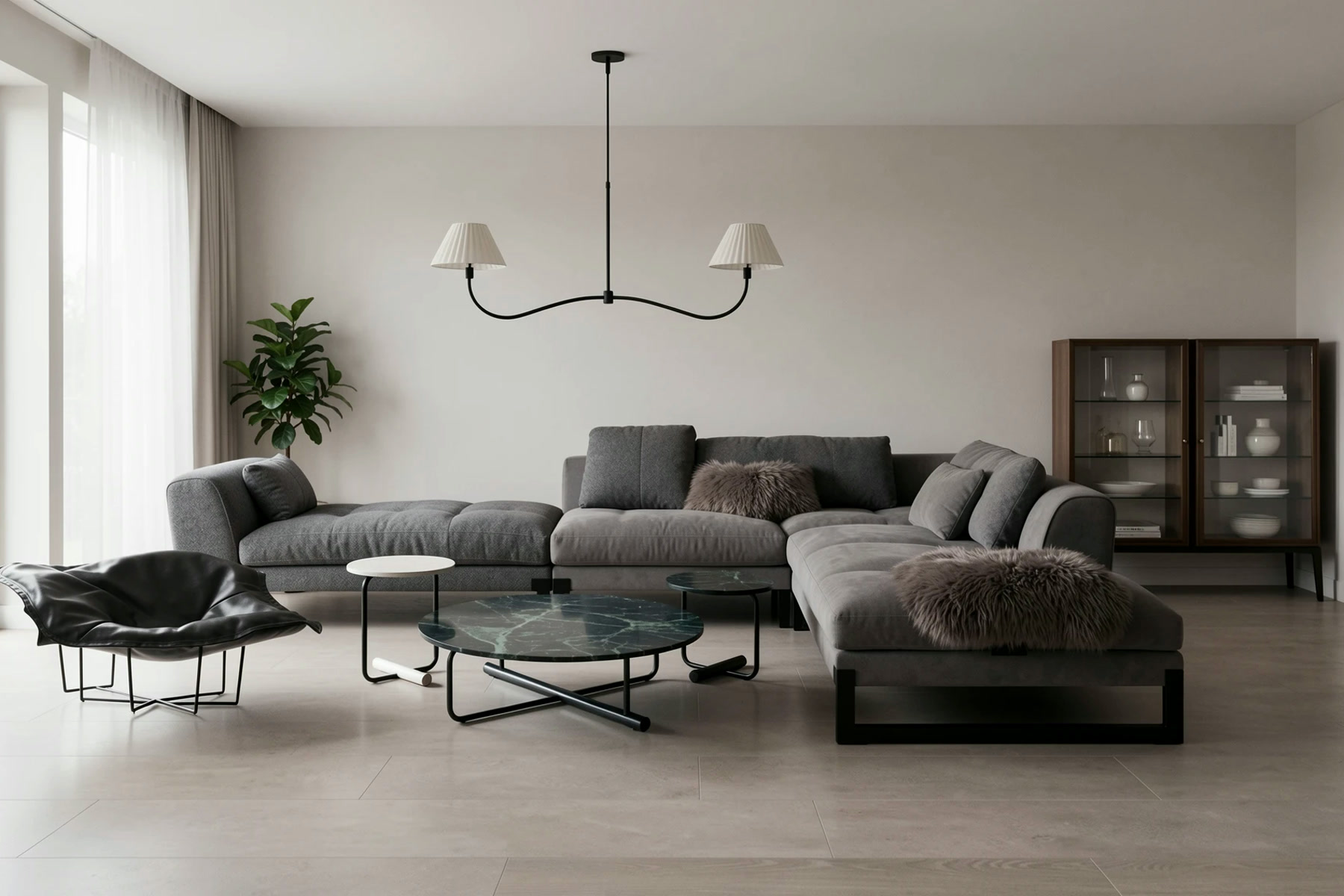
The slow part of an FF&E schedule is copying product details by hand. In Lovspark you pick furniture and lighting from the product library, which keeps the brand, model and purchase link with each item, and lay the pieces out on the canvas. Moodboard to Render then renders the selection as a room with AI, so the client can see the products together before anything is ordered.
When the selection is approved, export the products on the canvas as a material sheet in Excel or PDF, with code, room, brand, SKU, link, quantity and lead time columns. The board the client saw and the list the purchaser works from are the same set of items.
Frequently asked questions
What does FF&E stand for?
FF&E stands for furniture, fixtures and equipment: the movable items that furnish and equip a building, such as furniture, decorative lighting, artwork and freestanding equipment, as opposed to the built-in construction.
What is the difference between FF&E and OS&E?
FF&E is the long-life furniture, fixtures and equipment a designer specifies. OS&E, operating supplies and equipment, is the smaller items an operator uses up and restocks, such as linens, tableware and toiletries.
Is lighting part of FF&E?
Decorative lighting such as pendants, chandeliers, sconces and lamps usually is. Recessed downlights and track lighting are normally part of the electrical scope in the construction contract.
Are appliances FF&E?
Freestanding appliances such as a minibar fridge or coffee machine are often FF&E. Integrated kitchen appliances usually belong to the kitchen package. Agree the split in writing before pricing.
How is FF&E depreciated?
It is usually recorded as a fixed asset and depreciated over its useful life. In the US, IRS Publication 946 lists office furniture and fixtures as 7-year property under MACRS. Confirm with your accountant.
What is an FF&E schedule?
It is the list of every item to be purchased for a project, one row per item per room, with code, product, brand, SKU, dimensions, finish, quantity, cost, lead time and status.