
What is Ambience Shift?
Direct answerRe-light and re-mood an existing design image so you can test atmosphere options quickly for storytelling and client reviews.
Lovspark Ambience Shift takes one approved layout to multiple atmosphere directions.
Use it for hospitality, residential, and commercial scenes — anywhere light and mood sell the experience.
Because geometry stays put, stakeholders can judge pure atmosphere differences.
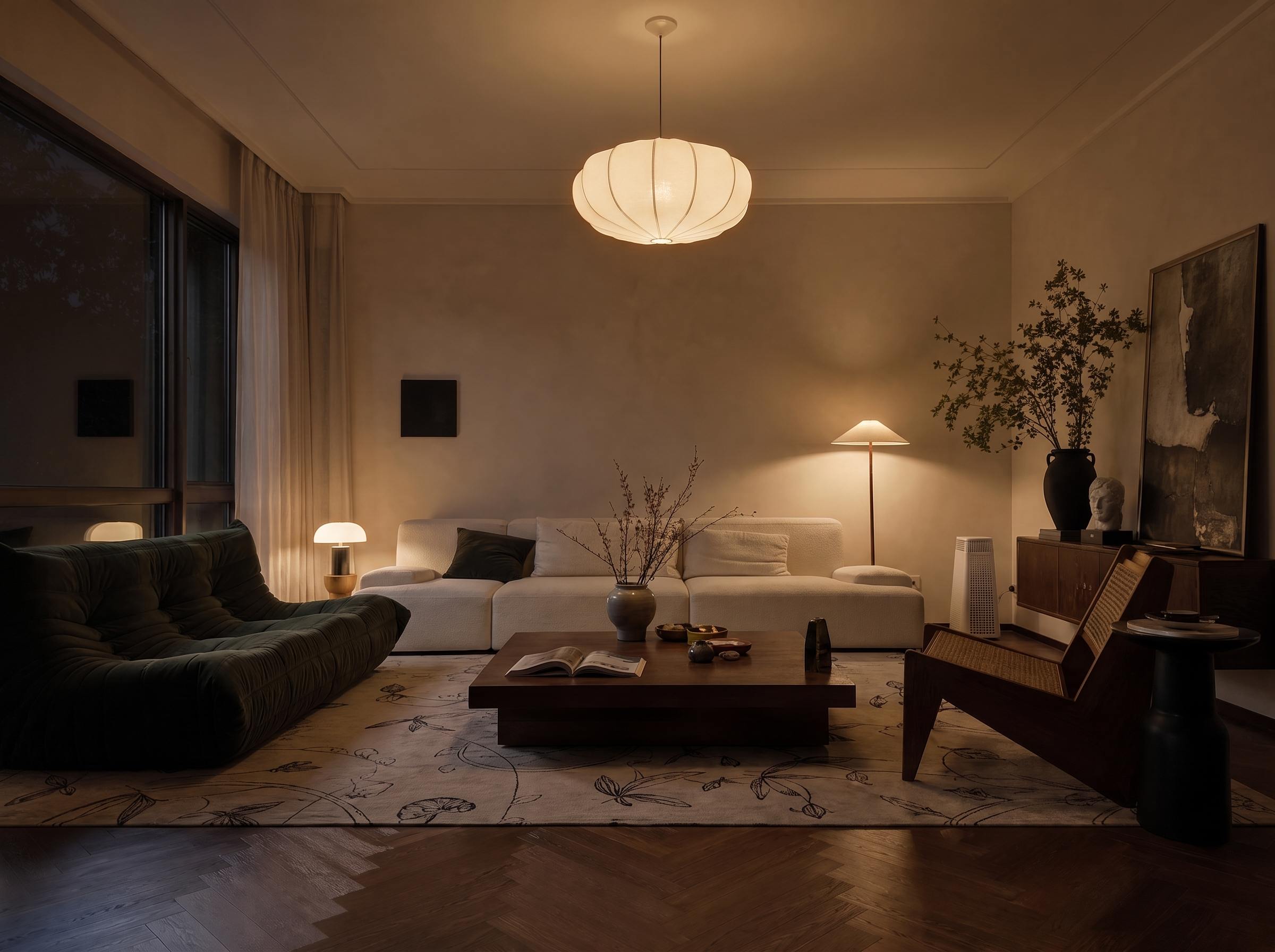
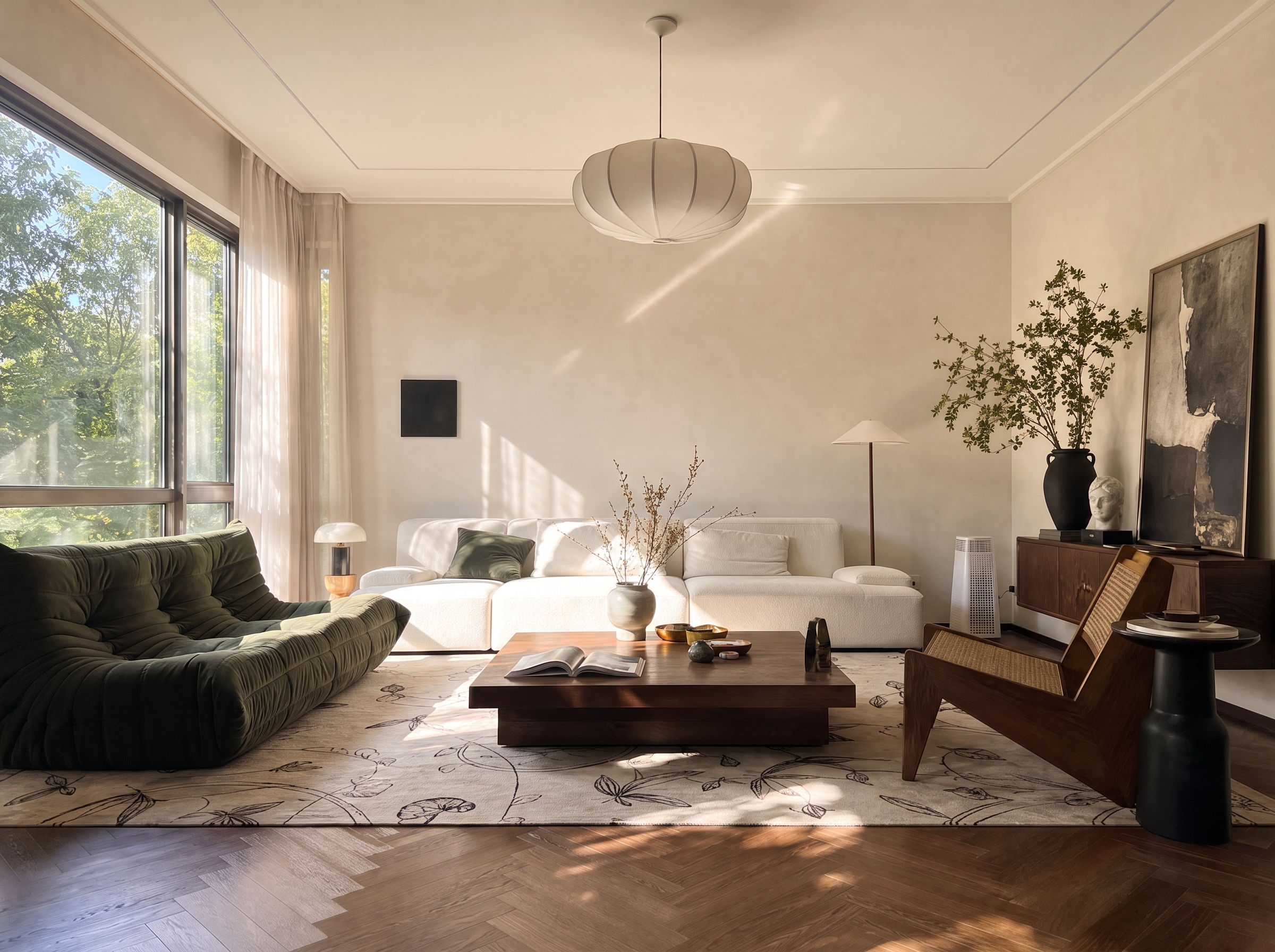
| Input | 1 space photo or AI render |
|---|---|
| Target | Target time / mood / lighting intent |
| Output | Same design under a new atmosphere |
| Preserves | Layout, furniture, and main structure |
| Best for | Mood boards, day-night sets, pitch decks |
- Furnished interior renders
- Exterior dusk/night studies
- Hospitality and retail scenes
Updated by the Lovspark Product Team, based on the live product and real project examples.
Sources: Lovspark product documentation · Lovspark Academy
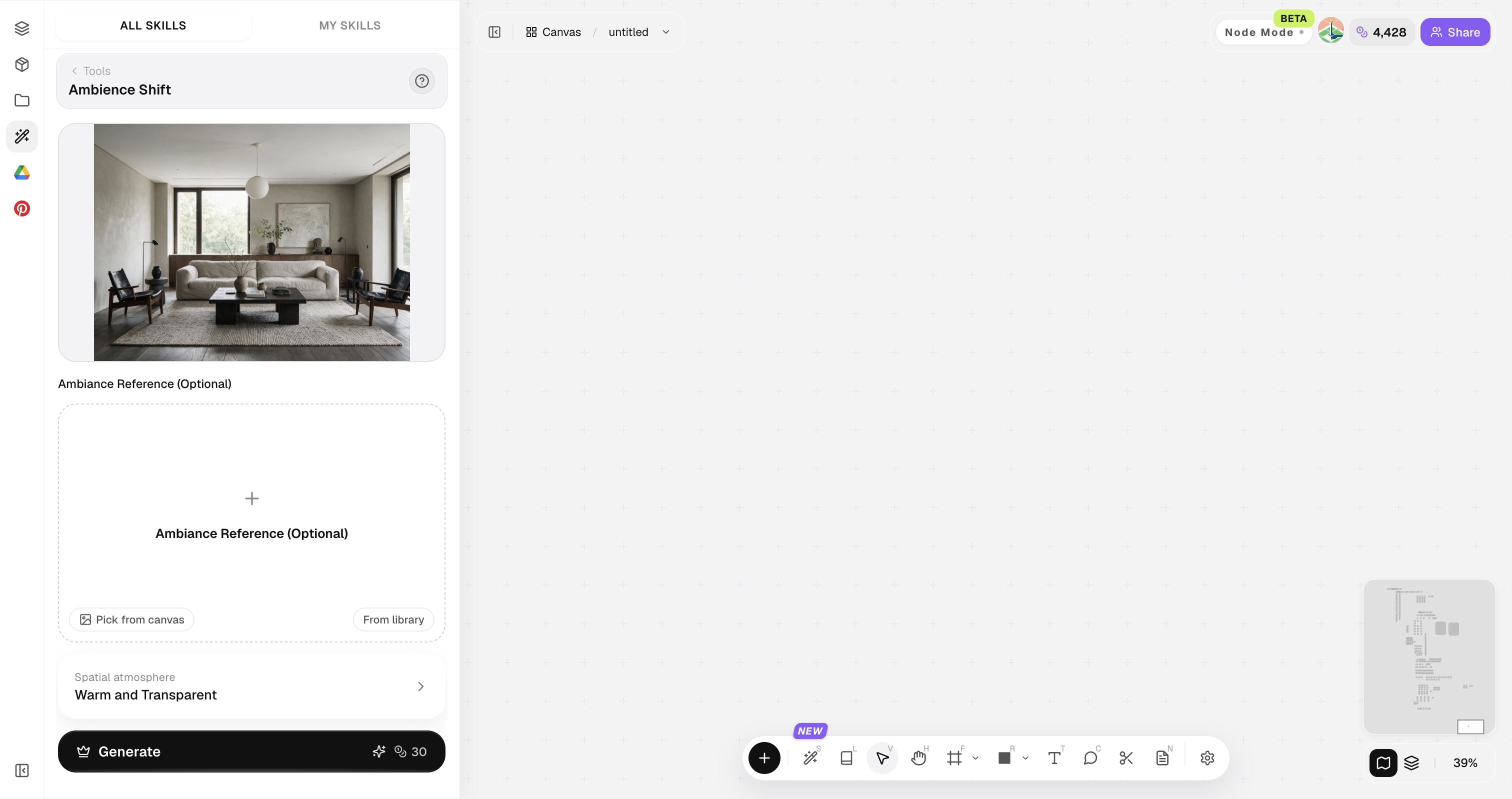
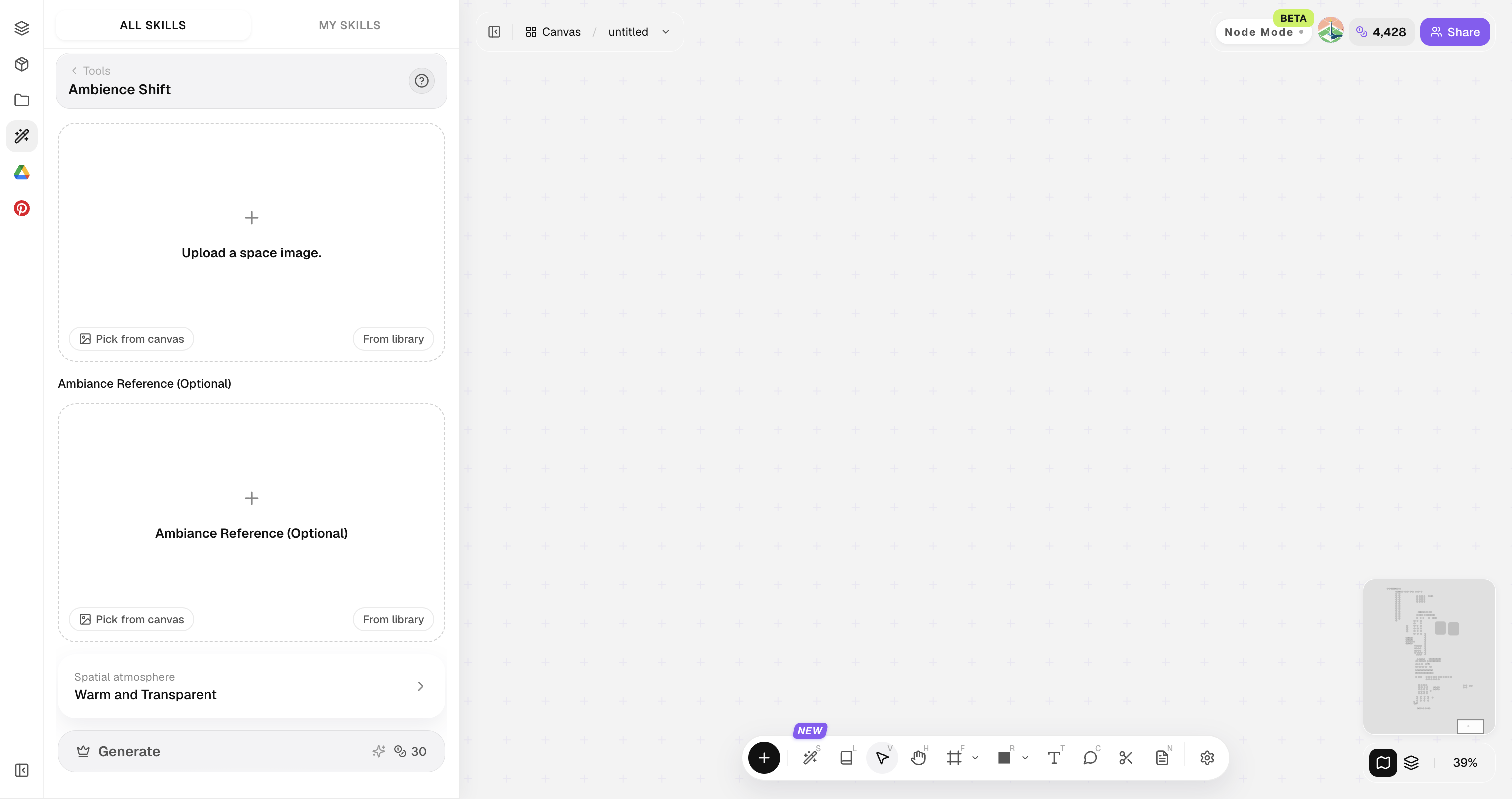
Ambience Shift feature panel
Open Skills library and choose Ambience Shift. Upload the original scene, choose one of three built-in ambience styles or add your own reference, set the image ratio, then generate the new atmosphere.
Start from a well-exposed base image; extreme underexposure limits night or golden-hour quality.
How to use Ambience Shift
Four steps from one scene to a full mood set.
Open Skills library and choose Ambience Shift
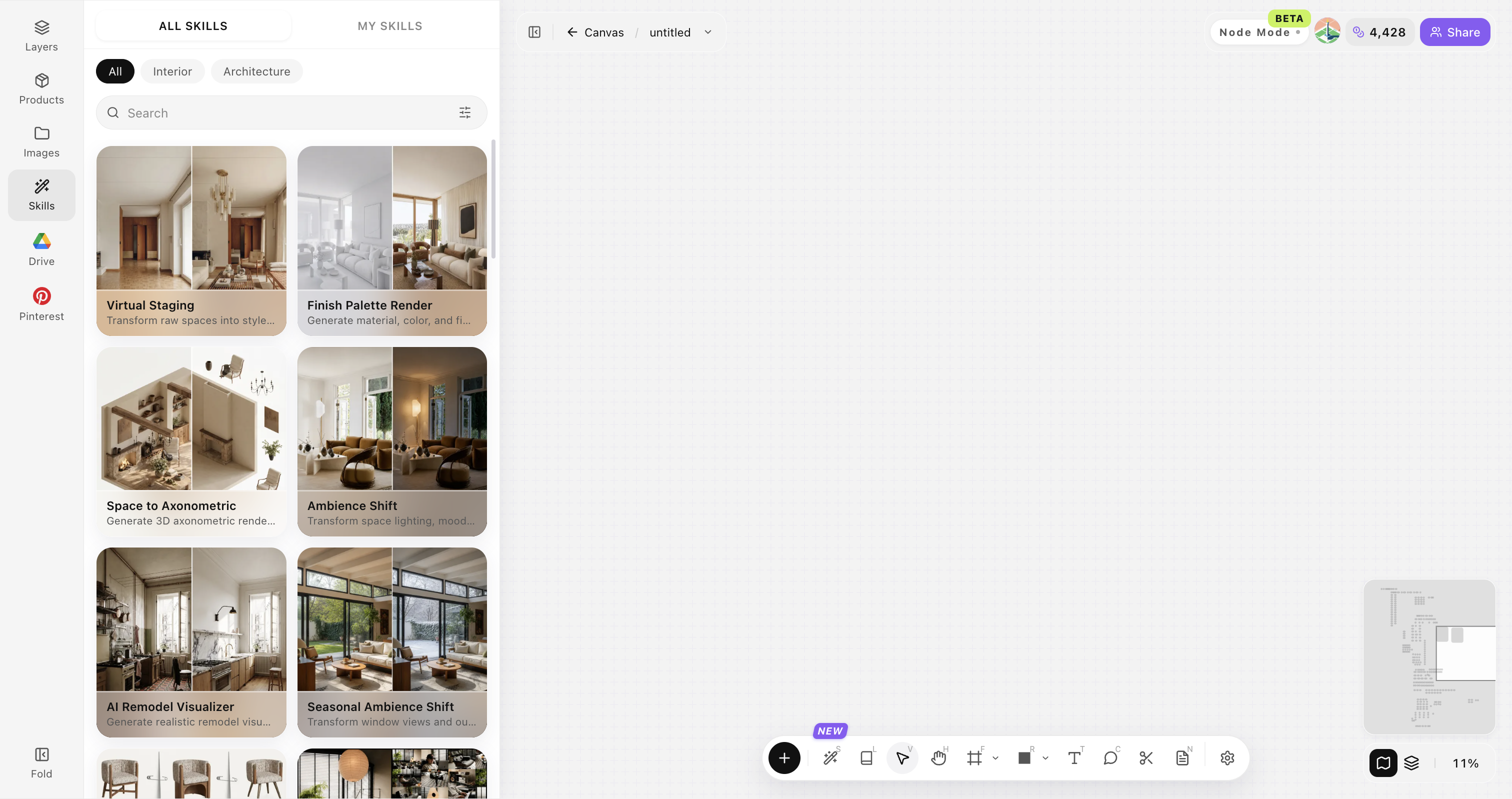
Open Skills library, then choose Ambience Shift from the skill list to start this workflow.
Upload your original image
Upload, paste, or drag in a clear original image. It becomes the base for this generation.
Choose a preset or upload your own reference
Choose one of the three built-in ambience styles, or upload a custom style-reference image for a more specific direction.
Generate and switch between moods
Generate the options, then switch between mood versions in the same frame to compare lighting, color temperature, and contrast.
Tips for stronger atmosphere shifts
Think like a cinematographer — time of day, color temperature, and contrast.
Lock what must not change
State that layout, furniture, material hue, and camera angle must remain unchanged so the variation stays focused on lighting and atmosphere.
Define the dominant light by time
Specify morning, afternoon, dusk, or night, then identify whether window light, ceiling light, or fixtures are the dominant source.
Make every light source explainable
For evening scenes, show where interior or exterior light comes from; avoid bright surfaces and shadows with no plausible source.
Control color temperature, not just color
Warm light suits hospitality and evening living scenes; cooler light suits galleries and early morning. Mention any required white balance for key finishes.
Keep material recognition intact
Wood, stone, and fabrics can shift under colored light. Generate a neutral version first when the image will be used in a proposal.
Ambience Shift FAQ
Use this for light and mood — not for rearranging furniture.
What is Ambience Shift?
Ambience Shift changes lighting, time of day, and mood on a finished design image while keeping layout and structure stable for fair comparison.
Can I turn day into night?
Yes, and you can also target dusk, overcast, or warm evening tones.
Will furniture move?
It prioritizes keeping layout and furniture placement.
Is it only for interiors?
No, exteriors and semi-outdoor spaces work too.
How many moods should I generate?
Start with 3–4 options for a clear decision set.